
Desert Heritage and City Charm Near Mesa, Arizona 85203
A Cultural Tapestry Along Main Street
Downtown Mesa unfolds with an inviting rhythm—galleries, theaters, and shaded sidewalks that invite unhurried exploration. Begin with the Mesa Arts Center, a gleaming complex where performance halls and studios hum with creativity. Exhibitions rotate frequently, bringing contemporary works to desert light. Just a short walk away, the Arizona Museum of Natural History uncovers the region’s geological and paleontological saga. Dinosaur skeletons tower in dramatic poses. A re-created Hohokam village illustrates ancestral ingenuity with canals and earthen architecture. For a hands-on twist, the i.d.e.a. Museum engages curious minds with tactile exhibits that blend art and science. Murals color alleyways and building facades, transforming Old Town into an open-air gallery that feels both storied and fresh. Evening strolls reward lingerers with warm light, café chatter, and the faint echo of live music.
Ancient Footprints and Desert Engineering
Long before boulevards and bougainvillea gardens, the Hohokam people engineered an elaborate irrigation network that made the Salt River Valley flourish. Those traces are tangible at Mesa Grande Cultural Park, where a monumental platform mound rises from the earth like a sunbaked citadel. Interpretive panels bring context to ritual spaces and trade connections, while gentle pathways encourage quiet reflection. Nearby, Park of the Canals showcases remnants of ancient waterways, paralleling contemporary channels that still nourish the city. The Lehi Historic District, one of the area’s earliest settlements, adds another chapter: adobe homes, pioneer narratives, and the subtle continuity of life along the river corridor. These sites invite contemplation, revealing how ingenuity shaped a desert community across centuries.
Trails, Peaks, and Riparian Havens
For those craving open skies, the eastern horizon beckons with serrated silhouettes and fragrant creosote. Usery Mountain Regional Park unfurls a lattice of trails—Wind Cave Trail climbs steadily to a breezy alcove carved into crumbling volcanic tuff. Cyclists carve graceful lines along the Hawes Trail System, where red rock and palo verde frame saguaro sentinels. Water reflections—unexpected and mesmerizing—appear at the Riparian Preserve at Water Ranch in neighboring Gilbert, where migratory birds congregate in seasonal abundance. Beyond, Saguaro Lake shimmers beneath craggy walls; kayakers trace the coves while anglers cast for bass at dawn. Those who prefer swift currents find serenity along the Salt River near Granite Reef Recreation Area, a verdant thread through the desert. The day’s finale often belongs to the Superstition Mountains, where Lost Dutchman State Park offers golden-hour panoramas that feel almost mythic.
Playgrounds, Green Spaces, and Family Wanderings
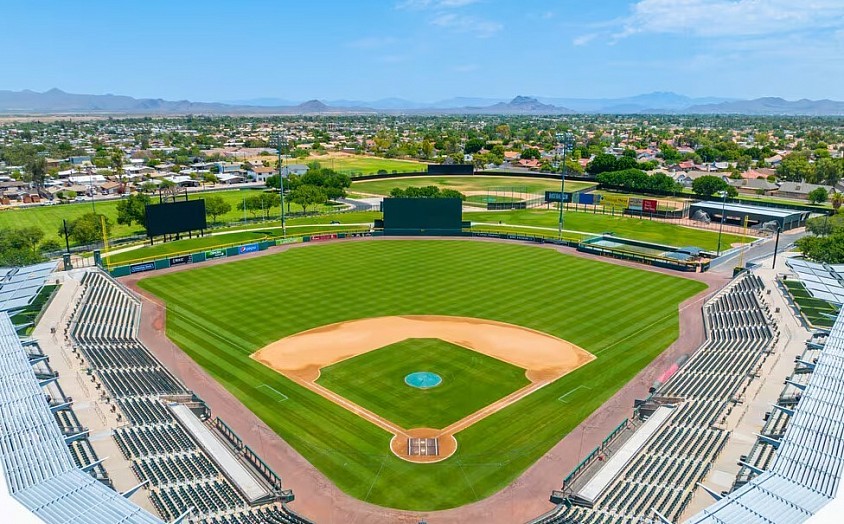
Mesa’s parks interlace neighborhoods with shade, sculpture, and playful engineering. Pioneer Park features imaginative climbing structures, an antique locomotive for youthful exploration, and a canopy of mature trees that soften summer sunlight. Likewise, Riverview Park’s spectacular climbing tower and lakeside promenade create a festive atmosphere for family picnics and casual strolls. Seasonal fun abounds at Sloan Park during spring training, when baseball returns with the sound of crackling bats and cheerful crowds. Hohokam Stadium adds another diamond to the itinerary, carrying forward a tradition of America’s pastime in the Valley. The Mesa Market Place Swap Meet turns weekends into treasure hunts—booths brim with handcrafted goods, vintage curiosities, and regional flavors. Simple pleasures thrive here: shaded benches, the scent of kettle corn, and conversations with local makers.
Aviation, Architecture, and Industrial Lore
On Mesa’s northeast side, history takes flight at the Arizona Commemorative Air Force Museum. Vintage aircraft—sleek warbirds with polished skins—line hangars at Falcon Field. Volunteers recount sorties and restoration efforts with remarkable detail, and rides on historic planes offer unforgettable perspectives of the Sonoran terrain. Farther afield but culturally entwined, Taliesin West illuminates desert modernism with its low-slung forms and textural materials. The compound’s geometry harmonizes with sun, wind, and stone, transporting visitors into the mind of a visionary architect. Industrial narratives surface across the Valley, too—from the engineering feats of the Granite Reef Diversion Dam to the utilitarian grace of the Arizona Canal and its multiuse paths. These living systems sustain agriculture, neighborhoods, and wildlife, creating a subtle backbone for daily life.
Notable Sites at a Glance
- Mesa Arts Center
- Arizona Museum of Natural History
- i.d.e.a. Museum
- Mesa Grande Cultural Park
- Park of the Canals
- Lehi Historic District
- Pioneer Park
- Riverview Park
- Usery Mountain Regional Park
- Hawes Trail System
- Riparian Preserve at Water Ranch
- Saguaro Lake
- Salt River (Granite Reef Recreation Area)
- Lost Dutchman State Park
- Superstition Mountains
- Sloan Park
- Hohokam Stadium
- Mesa Market Place Swap Meet
- Arizona Commemorative Air Force Museum
- Falcon Field
Seasonal Journeys and Day-Trip Extensions
Seasonality shapes the East Valley’s itinerary. Winter draws hikers to crisp mornings on desert trails; spring overlays the landscape with wildflower color. In summer, sunrise excursions to Canyon Lake or quiet kayaking near coves keep adventure on a gentle cadence. Autumn invites leisurely rambles at Boyce Thompson Arboretum in nearby Superior, a living encyclopedia of desert flora. The Apache Trail, when segments are open, provides an expedition through rugged canyons and timeworn cliff faces. Urban interludes remain tempting: Papago Park’s red buttes and Hole-in-the-Rock at sunset, the Desert Botanical Garden’s glowing cacti in twilight, and Tempe Town Lake’s serene shoreline walks. Each outing pairs neatly with Mesa’s core—returning to Main Street cafés, public art, and the soft whir of evening traffic beneath desert stars.
Practical Notes and Local Texture
Wayfinding is straightforward, with Valley freeways connecting cultural districts and trailheads in short order. Early starts conserve energy; ample water and sun protection are essential. Many sites host community events—art fairs at the Mesa Arts Center, astronomy nights at riparian habitats, and family days at museums. Dining close by ranges from taco stands perfuming the air with mesquite to refined eateries plating regional produce. The result feels cohesive yet varied, a confluence of heritage, landscape, and everyday delight. In and around Mesa, exploration rewards patience and curiosity, revealing layers of story etched into rock, canvas, runway, and riverbank.
Desert Heritage and Urban Wonders near Mesa, Arizona 85203
Ancient Footprints at Mesa Grande Cultural Park
On a low rise of desert earth, the Hohokam left a legacy etched in caliche and memory. Mesa Grande Cultural Park preserves a massive platform mound, a ceremonial locus that once anchored a sophisticated irrigation society. Wandering the interpretive pathways, the mind conjures canals glinting in the sun, fields green with ancient agriculture, and gatherings held atop the terraced platform. Exhibits explain engineering feats that rerouted river water across harsh terrain long before modern plumbing. The site’s quiet ambiance encourages contemplation. It feels less like a ruin and more like a conversation with time. Visit at sunrise or late afternoon for soft light that coaxes detail from weathered adobe and stone.
Time-Travel at the Arizona Museum of Natural History
Downtown, the Arizona Museum of Natural History animates epochs with verve. Dinosaurs loom in dynamic poses, their fossilized bones arranged as if mid-stride. The soundscape rumbles with speculative thunder. Step into the Mesozoic gallery, then pivot to the Old West—an immersive streetscape where prospectors and lawmen share space with artifacts of migration and trade. Children gravitate to the “flash flood” experience, a rousing cascade that courses through a rocky gulch on schedule. Beyond spectacle, scholarly curation ties Arizona’s geology to the wide tapestry of the Southwest. Meteorites, minerals, and prehistoric tools reveal a region shaped by collision, erosion, and ingenuity. Knowledge here doesn’t sit behind glass; it prowls, clatters, and astonishes.
Family Greenery at Pioneer Park
Pioneer Park spreads beneath venerable shade trees and a patriotic locomotive that anchors the grounds with a rumbling sense of history. The train is static yet evocative—an emblem of rails that once stitched towns into markets. Families congregate beneath pavilion roofs, and the playground invites creative scrambling across climbing structures that resemble abstract canyons. A splash pad sends arcs of water toward cheering toddlers. On weekends, the park often hosts community gatherings and open-air concerts, transforming lawns into convivial plazas. Bring a picnic. Spread a blanket near the rose plantings. Let time saunter while the city hums around the periphery.
Innovation and Play at the i.d.e.a. Museum
A short stroll away, the i.d.e.a. Museum merges imagination with tactile making. Exhibits pivot around art, science, and design—trifecta disciplines that invite experimentation rather than passivity. Children build contraptions, storyboard narratives, and test prototypes that wobble, then work. Rotating installations feature local artists and regional themes, grounding creativity in place. Caregivers find quiet satisfaction in watching curiosity catch fire. Outside, murals along nearby alleys and façades extend the artistry, creating a patchwork of color along Main Street. Together, museum and streetscape sketch a portrait of a city invested in creativity across generations.
Water, Shade, and Skyline at Riverview Park
Riverview Park pairs riparian respite with metropolitan verve. Palms and mesquites pattern shade over looping walkways. A climbing tower rises like modern sculpture, inviting daring ascents and triumphant views. Anglers line the urban lake at dawn, when the water takes on a pewter sheen under restless clouds. Ballfields and open spaces support everything from pickup soccer to meditative yoga at sunrise. The nearby shopping and dining corridors create a seamless glide from recreation to refreshment. As twilight arrives, the park’s lighted features glow, and the skyline softens into silhouette against the Superstition foothills beyond.
Trails and Tuff at Usery Mountain Regional Park
Eastward, desert dramatically asserts itself. Usery Mountain Regional Park unfurls a radiating network of trails that meander through stands of saguaro, cholla, and brittlebush. Wind carries the scent of creosote, especially after a rare summer monsoon. The Wind Cave Trail draws hikers onto volcanic tuff where a shallow cavern frames the valley like a natural proscenium. Birders prize the park for gilded flickers and Harris’s hawks wheeling on thermals. In spring, wildflowers stipple the floor with lupine, owl’s clover, and Mexican gold poppies, invoking a painter’s palette scattered across stone. Come prepared with water, respect the terrain, and watch for the lengthening shadows that signal desert dusk.
Spring Tradition at Hohokam Stadium
Baseball beats like a seasonal metronome at Hohokam Stadium. Each spring, fans swarm to watch preseason matchups in amiable warmth. The venue’s scale feels intimate, and the outfield grass invites afternoon reverie beneath a cobalt Arizona sky. Even beyond March, the complex supports local tournaments and community events, knitting sport into civic life. Concessions trend toward the familiar—hot dogs, peanuts, and a sense that time bends slightly when the umpire’s call cuts through the chatter. For visitors, it’s an effortless way to absorb the region’s ritual of sunshine and innings.
Street Art and Heritage on Main Street
Historic Downtown Mesa offers a strollable corridor where heritage architecture, galleries, and cafés coexist with an evolving canvas of street art. Murals bloom on brick, repurposing alleys into open-air galleries. Sculpture walks invite tactile engagement alongside interpretive plaques that chart the city’s metamorphosis from agricultural hub to cultural enclave. Independent bookstores and vintage shops entice leisurely browsing. Even the light rail adds rhythm, sliding past storefront windows with an urban whisper.
Additional Nearby Highlights
- Mesa Arts Center, a multi-venue campus for theater, music, and visual arts with luminous architecture.
- Park of the Canals, where ancient waterways meet botanical gardens and quiet footpaths.
- Commemorative Air Force Airbase Arizona Museum at Falcon Field, honoring aviation heritage with historic aircraft.
- Rose Garden at Mesa Community College, a fragrant seasonal flourish of thousands of blooms.
- Riparian Preserve at Water Ranch in nearby Gilbert, a mosaic of ponds and trails teeming with birdlife.
- Sloan Park, a lively spring baseball venue with expansive berm seating.
- Tempe Town Lake, a waterscape for kayaking, jogging, and skyline photography at sunset.
- Lost Dutchman State Park, a gateway to the Superstition Mountains and legend-soaked trails.
- Goldfield Ghost Town, a reconstructed mining settlement with period charm and mountain vistas.
- Park of Red Mountain District Park, broad fields, fishing lakes, and views of the namesake butte.
Each place, distinctive yet interconnected, showcases Mesa’s remarkable range—prehistoric ingenuity, contemporary creativity, outdoor vigor, and small-town conviviality within a metropolitan frame. Explore early, linger late, and let the Sonoran light add its own eloquence to the day.